
VAT Deregistration
Are you looking to deregister for VAT? It can be just as complex as registering. Remindoo turns this deregistration process into a structured, risk-free workflow. It ensures that every notification is sent on time and that a permanent audit trail is preserved. This protects your firm from HMRC enquiries after the client has left the VAT system.
Eligibility And Mandatory Notification
If your taxable turnover falls below the £88,000 deregistration threshold over a rolling 12-month period, you may apply to deregister. Under UK law, you must inform HMRC within 30 days of no longer required to be VAT registered. Moreover, if your business has stopped trading, joined a VAT group, or changed its legal structure, then timing is crucial to avoid administrative penalties.

Final VAT Return Preparation
The final return covers the time period up to your effective date of deregistration. HMRC typically confirms the final return deadline after processing the deregistration application. Calculate all VAT charged on sales and the VAT reclaimed on purchases up to the final date. HMRC will confirm the final submission deadline once the deregistration application is processed.
The “Deemed Supply” Asset Check
HMRC treats stock and certain assets held at the time of deregistration as a “deemed supply”. This happens if VAT was originally reclaimed on them. It is a common area for errors. If the total VAT due on these assets exceeds the current HMRC limit, then it must be declared and paid back in the final return.


Post Deregistration Admin And Paperwork
After HMRC confirms your deregistration, you must adhere to the following obligations:
- Stop charging VAT on all sales and services from the effective date of cancellation (EDC).
- Submit a final VAT return that covers the period up to and including the EDC. This return accounts for all sales and purchases made while still being registered.
- Charging VAT after the deregistration date is a compliance breach and may result in penalties and mandatory refunds to customers.
Record Maintaining And Statutory Audit Trail
VAT deregistration does not end your record-keeping obligations. HMRC can still inspect VAT recordsfor up to 6 years after deregistration. Accountants must ensure the “VAT exit documentation” is archived securely and easily accessible in the event of any HMRC enquiry.

VAT Deregistration with Remindoo
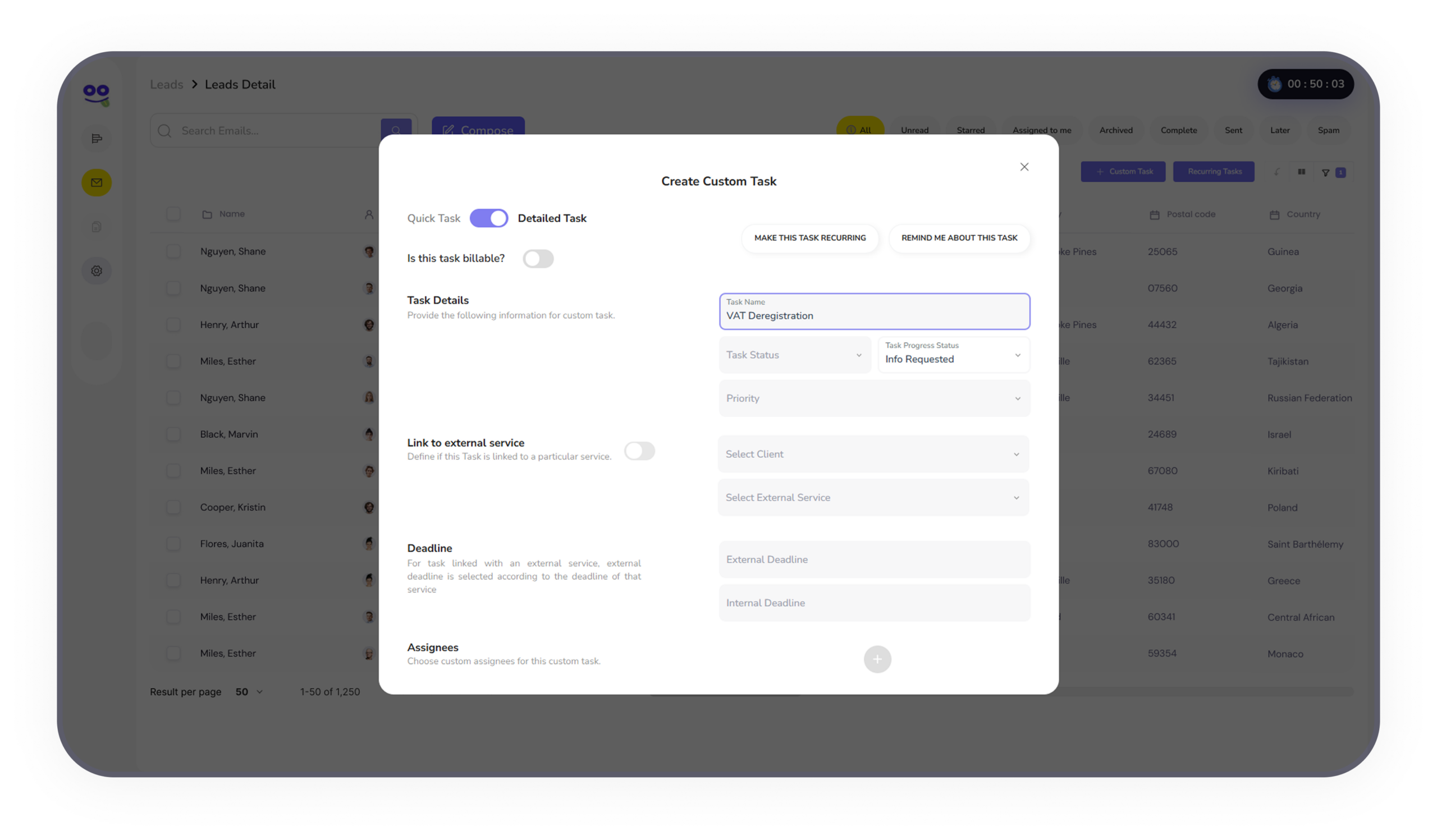
VAT deregistration involves several important steps, from preparing the deregistration forms and reviewing client records to submitting notifications to HMRC. Missing any step or deadline can lead to compliance issues or penalties. Remindoo helps manage VAT deregistration as a structured service, ensuring that all necessary actions are tracked, assigned, and completed efficiently. Using defined tasks, subtasks, and checklists, firms can maintain consistency, accuracy, and accountability throughout the deregistration process, while keeping a full audit trail and avoiding manual spreadsheets.
How It Works
- Create VAT Deregistration as a one-off service
- Create a main task for VAT deregistration and break it into subtasks for each stage
- Add a closure checklist to ensure all compliance steps and notifications are completed
- Assign the service to clients so tasks are applied automatically. Team members can use these built-in checklists and subtasks for each VAT deregistration service.
- Allocate team members to each task for clear ownership
- Set automated reminders for internal teams and clients to meet deadlines
- Track progress in a central system, maintaining a full audit trail without spreadsheets
With Remindoo, VAT deregistration becomes a structured, one-off workflow, helping firms complete every step correctly, maintain compliance, and reduce the risk of errors.
Ready to Transform Your Practice?
Join hundreds of accounting firms already using Remindoo to streamline their operations and grow their business.