
VAT Registration Checklist
In the UK, many businesses need to register for VAT. Remindoo simplifies VAT registration by automating workflows and centralising task management. By organising evidence and tracking deadlines, Remindoo helps reduce HMRC rejections and supports a seamless registration process for growing clients. Remindoo ensures every application is backed by the correct documentation and processed without any administrative delays.
Registration Requirements
Identify whether the registration is mandatory or voluntary before you start the paperwork. In the UK, a business must register for VAT if its taxable turnover exceeds the £90,000 threshold or isexpected to exceed it within the next 30 days.

AML & Identity Verification
HMRC requires thorough UK Anti-Money Laundering (AML) checks for tax registration. This is mostly done for tax advisors, accountants and high-value dealers. Confirm the identity of the business owners and verify their nature of business before applying. UK AML checks are required before submitting VAT application as it is a legal requirement under UK AML regulations to prevent fraudulent VAT registrations.
Choosing the Right VAT Scheme
Now, select the best VAT scheme during registration to improve cash flow and simplify bookkeeping. The VAT scheme should be selected based on the business’s industry and turnover. This helps prevent the need for later adjustments and supports efficient cash flow management. These include:
- Standard or accrual based VAT: Reporting is done on the basis of invoice date. It good for businesses reclaiming input VAT frequently.
- Cash Accounting: You pay VAT to HMRC when the customer pays you. It is useful for managing cash flow, especially for businesses with longer payment cycles.
- Annual Accounting: A single annual return with quarterly advance payments is more suitable for stable businesses that seek less admin.
- Flat Rate Scheme (FRS): You pay a fixed percentage of your gross turnover. This scheme is generally suitable for businesses that seek less admin.
- VAT Margin Scheme: It is only useful for second hand goods, art, etc. You are required to account for VAT on your profit margin.


Gathering Business Details
The online application through the Government Gateway requires your business data, such as your business’s Unique Taxpayer Reference (UTR). This information helps prevent the online application session from timing out and ensures the details provided on the VAT certificate are accurate. Yes, any errors or omissions can cause delays in receiving the VAT number.
Submitting the Application
Ensure the client has authorised you to act on their behalf through the Digital Services tax account. This authorisation allows future filings and correspondence to be managed directly on the client’s behalf. After verifying the data, the formal application is submitted to HMRC.


Post-Registration Setup And Compliance
After the VAT number is issued, the client must be transitioned to Making Tax Digital (MTD) compliance. This helps them ensure they are charging VAT accurately and that they keep records meeting HMRC’s digital standards. The UK VAT law is dynamic and subject to frequent changes. This helps in staying informed for accurate compliance and avoiding penalties.
VAT Registration with Remindoo
VAT registration involves collecting accurate business information, completing HMRC requirements, and ensuring submissions are made correctly and on time. Managing this process manually can lead to delays, errors, or missing information. Remindoo helps firms manage VAT registration as a structured service within the CRM, giving teams visibility, consistency, and control throughout the process.
How It Works
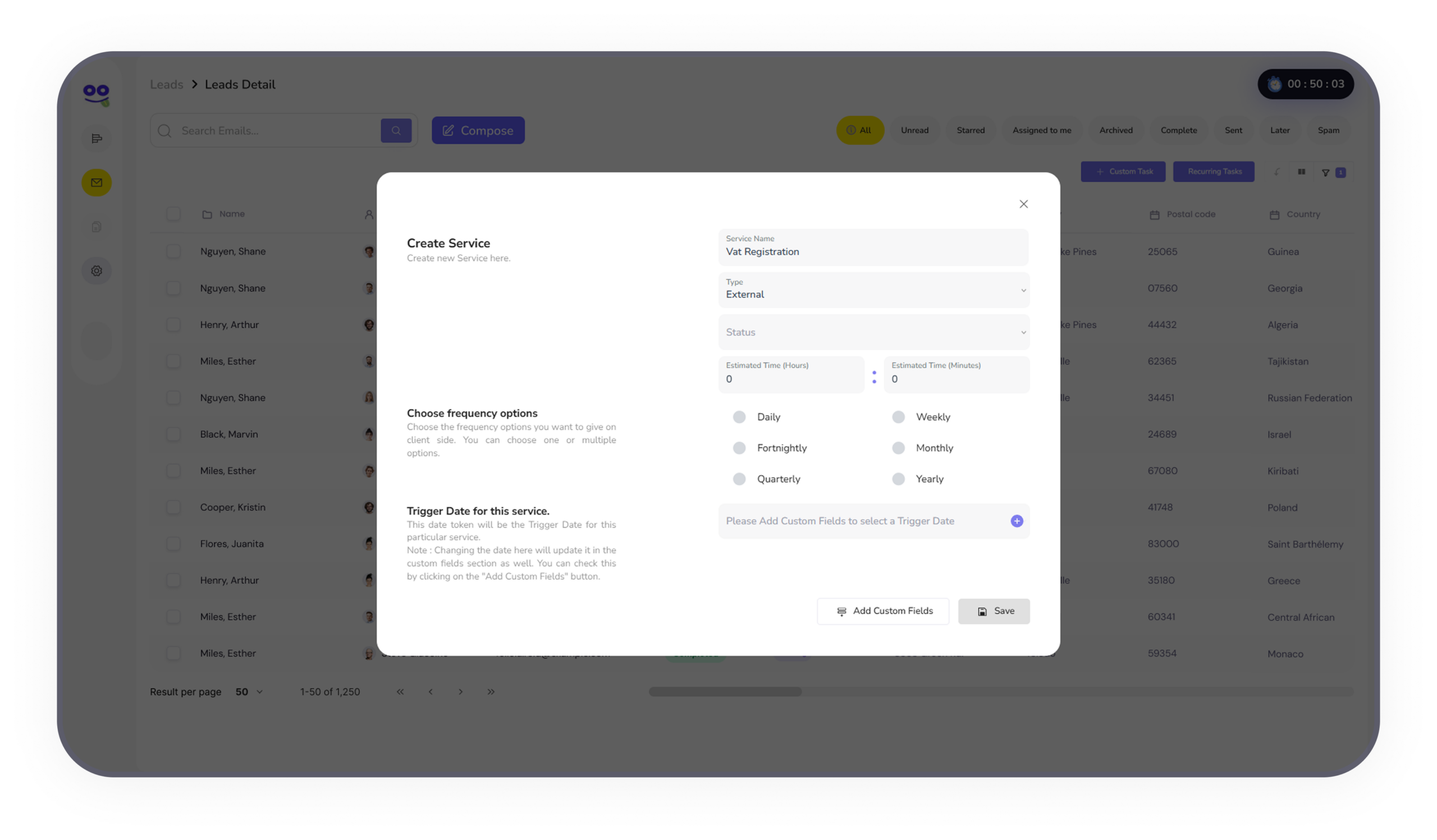
- Create VAT Registration as a service template to standardise the registration process
- Create tasks and subtasks for each stage, including business details collection, VAT scheme selection, and HMRC submission
- Use a VAT registration checklist to confirm required information such as turnover, business activities, start date, and bank details
- Track supporting documents and approvals to ensure all HMRC requirements are met before submission
- Assign the VAT registration service to individual clients so tasks and checklist steps are applied automatically
- Allocate team members to each task for clear ownership and accountability
- Set up reminders for internal teams to avoid delays and incomplete submissions
- Monitor progress in a central system with a full audit trail, removing the need for spreadsheets and manual follow-ups
With Remindoo, VAT registration becomes a clear, traceable workflow, helping your firm submit accurate registrations while maintaining compliance and efficiency.
Ready to Transform Your Practice?
Join hundreds of accounting firms already using Remindoo to streamline their operations and grow their business.